
Ben's Medical Calling
East of the MountainsBen's identity as a physician reawakens through acts of practical care after retirement and a terminal diagnosis.
increasing Bearing strength in each event
 decreasing
Bearing strength in each eventdecreasingThe Surgeon in Retirement
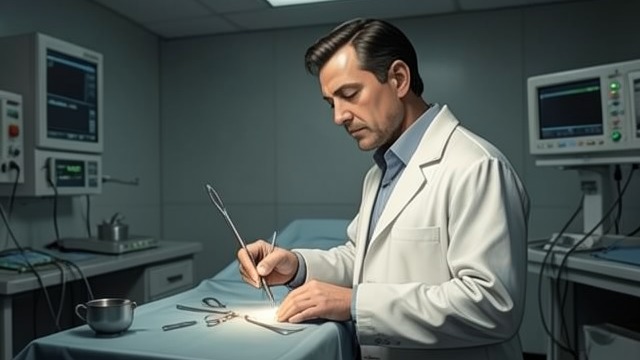
The Surgeon in Retirement
A practiced identity
Ben spent his career as a thoracic surgeon, admired for steadiness and precision. In the operating room, narrow focus made intervention possible.
Limits of medicine
His own cancer forces him to face the limits he once resisted accepting in other patients. Expertise explains the disease without offering a cure.
A dormant vocation
He initially sees no meaningful work ahead, but the journey will repeatedly place other people's needs before him.
Treating His Own Wound
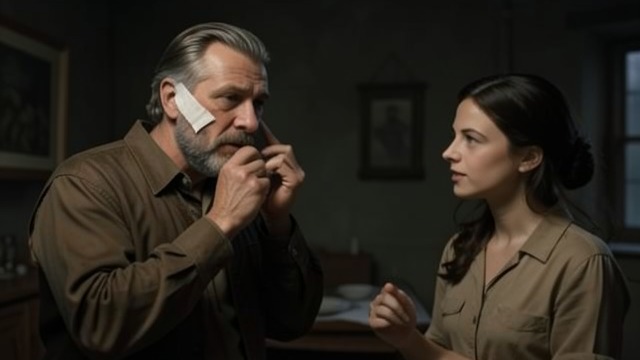
Treating His Own Wound
Practical self-care
After the crash, Ben cleans and dresses the cut above his eye rather than wait for help. His familiarity with wounds steadies him amid confusion.
A temporary disguise
He tells the young couple that he knows a doctor in Quincy, concealing how little he intends to protect his own future. Medical competence serves the suicide plan as readily as survival.
A role still present
Even while lying to others, Ben behaves methodically and preserves his ability to act. The doctor's habits remain active beneath his resignation.
Field Surgery for Rex
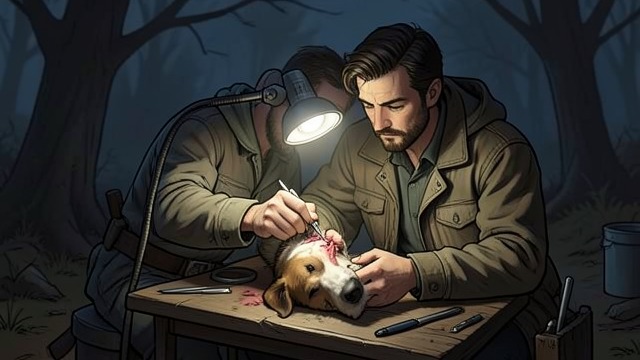
Field Surgery for Rex
Injury assessment
Ben examines Rex's deep wounds by headlamp and recognizes that they must be closed before the dog can travel. His medical kit was prepared for climbing emergencies, not veterinary surgery.
Care under pressure
He builds a fire, restrains Rex gently, and sutures the dog's injuries one-handed. The work demands patience from both surgeon and animal.
A return to usefulness
Finishing the stitches gives Ben a distinct, unexpected pleasure. His professional skill has become a means of preserving life rather than anticipating his own death.
The Emergency on the Bus
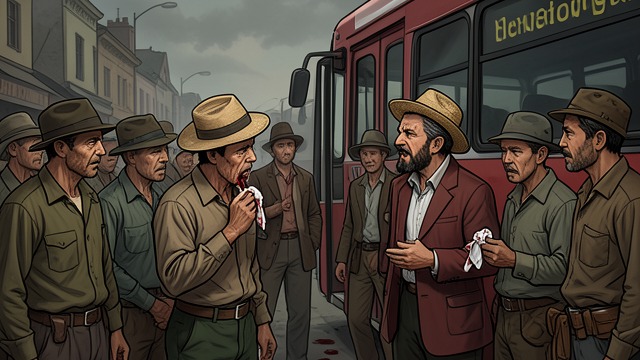
The Emergency on the Bus
A sick passenger
Ben hears a young migrant worker coughing severely and recognizes that the illness may be dangerous. Catherine Donnelly translates as he questions the worker and his companions.
Diagnosis without certainty
Ben suspects tuberculosis but cannot confirm it or prescribe a complete treatment from a bus seat. His honesty about uncertainty does not diminish the urgency he perceives.
Action despite barriers
When Angel coughs blood, Ben calls emergency services in Wenatchee. He intervenes despite the workers' fear that hospital care may expose them to deportation.
Delivering the Baby
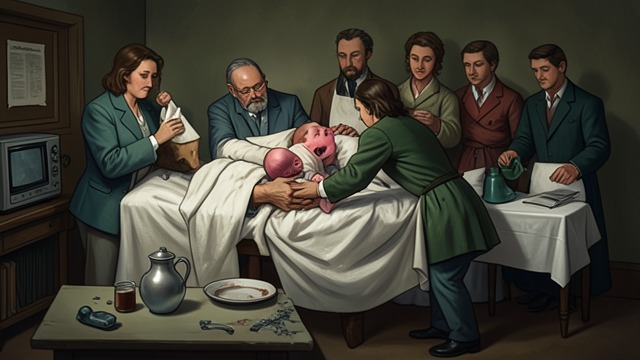
Delivering the Baby
A dangerous labor
Ben is summoned to help Doris, a fifteen-year-old who has been laboring for more than a day. The baby's head is already showing, making a hospital transfer too late.
A difficult intervention
Recalling limited obstetric training, Ben identifies the baby's trapped shoulder and frees its arm. He acts despite fatigue, cancer, and uncertainty.
A new life
The infant begins breathing and turns pink in Ben's hands. The emergency makes his medical knowledge an immediate gift to a family that had prayed for help.
Before the journey
At Traveler's Rest after the crash
The night after the wolfhound attack
The bus ride from Quincy toward Wenatchee
Before dawn at the Wolfhound Orchard camp
